John Stenersen – Interview zu seinem Solo-Projekt
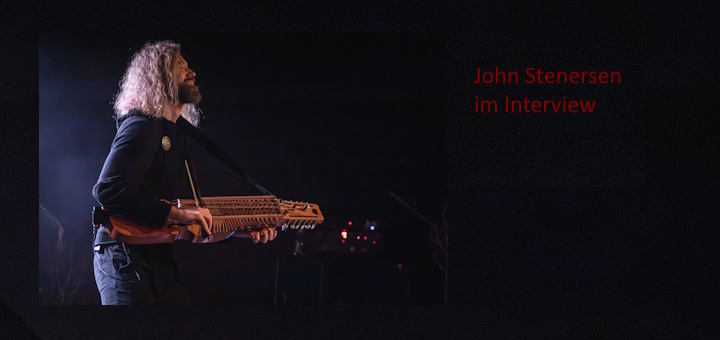
Scroll down for the original interview (in English)
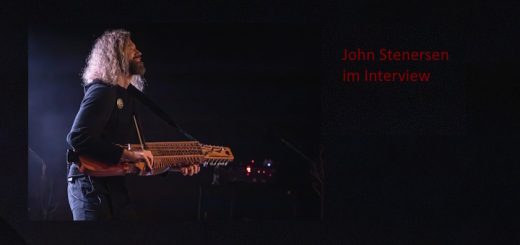
Mit der Nyckelharpa als zentralem Instrument verbindet JOHN STENERSEN alte nordische Traditionen mit einer ausgesprochen dunklen, atmosphärischen Klangsprache. Bekannt durch seine Arbeit mit WARDRUNA und GÅTE, verfolgt er nun seit vielen Jahren ein eigenes Solo-Projekt, in dem traditionelle Melodien auf Drone-Flächen, historische Instrumente und moderne Klangwelten treffen. Beim Midgardsblót–Festival präsentierte er sein Projekt erstmals live – allein auf der Bühne, aber begleitet von einer Welt aus Klängen und Bildern.
Wie klingt norwegische Tradition, wenn man sie durch eine dunkle, moderne Klangästhetik betrachtet? Im Gespräch erzählt John Stenersen von seiner Faszination für die Nyckelharpa, den Anfängen des Solo-Projekts, der besonderen Atmosphäre des Midgardsblót-Festivals und davon, warum jetzt der richtige Moment ist, seine Musik mit einem größeren Publikum zu teilen.
Das Interview
Kommst du aus einer musikalischen Familie, in der traditionelle Musik eine Rolle spielt? Oder anders gefragt: Wie bist du zum ersten Mal mit traditioneller Musik in Berührung gekommen?
John: Nein, ich komme nicht aus einer musikalischen Familie. Niemand außer mir spielt ein Instrument – ich bin die Einzige.
Gab es einen bestimmten Moment, in dem du dachtest: Diese Musik möchte ich selbst spielen?
Mein Interesse an Musik begann schon früh. Im Fernsehen habe ich Konzerte und Auftritte von Geigern und Rockbands gesehen. Mich haben die Bühne und die Musik schon immer fasziniert und angezogen. Ich glaube, mein erster Kontakt mit Folkmusik war durch Annbjørg Lien und ihr Album „Prisme“.
Die Nyckelharpa scheint inzwischen dein Instrument zu sein – schließlich steht sie im Mittelpunkt deines Soloprojekts. Wie bist du dazu gekommen, dieses Instrument zu spielen? Hattest du Unterricht oder einen Lehrer? Ich habe gelesen, dass du dir das Spielen selbst beigebracht hast.
Ich wollte eigentlich schon immer Geige spielen, aber ich habe nie einen Lehrer gefunden. Und es war ziemlich schwierig, mir das Instrument anhand von Büchern selbst beizubringen, weil man bei einem leeren Griffbrett schließlich nicht weiß, wohin mit den Fingern. Heute ist das dank YouTube und Markierungen auf dem Griffbrett viel einfacher, aber damals gab es so etwas für mich nicht.
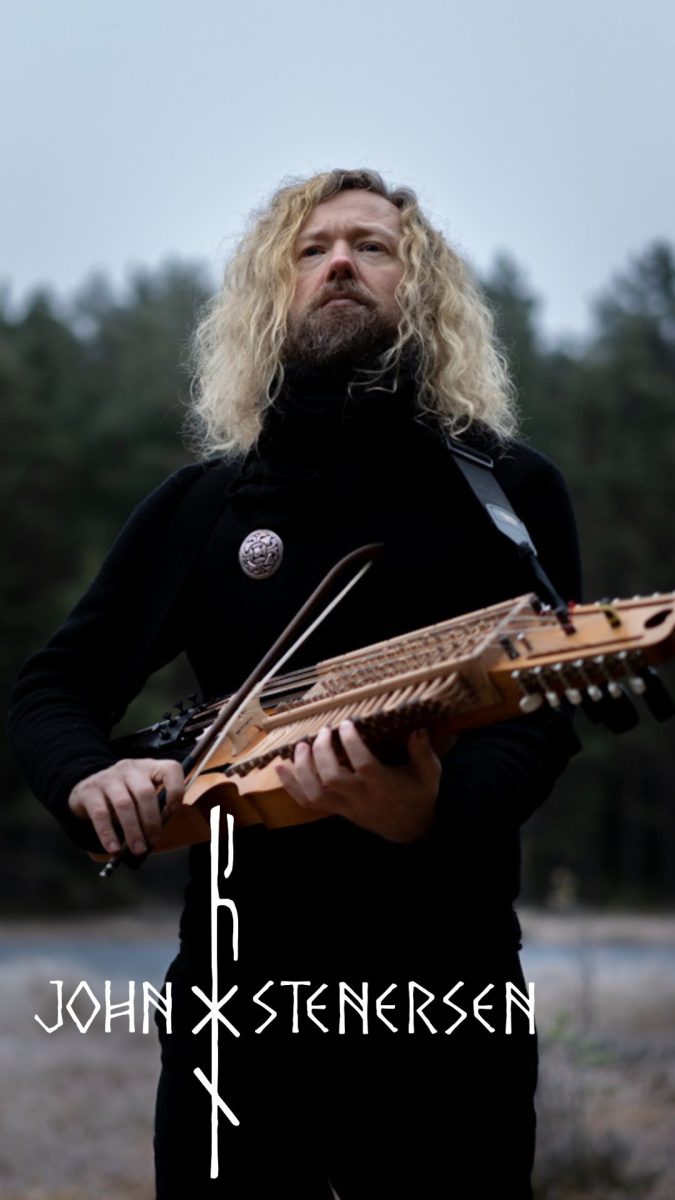
2008 war ich auf einem Festival und traf dort einen Schweden, der mir von der Nyckelharpa erzählte. Ich wusste zunächst überhaupt nicht, was das für ein Instrument war. Also zeigte er mir ein Foto. Und in dem Moment, als ich es sah, wusste ich: Das kann ich mir selbst beibringen.
Ich suchte anschließend auf YouTube danach und fand ein Video von einer Frau, die Nyckelharpa spielte. Ich war sofort begeistert von ihrem Klang, weil er wie eine tiefe, dunkle Hardangerfiedel klingt.
Du hast dich also auf Anhieb in den Klang verliebt. Wie ging es danach weiter?
Zwei Wochen später fuhr ich nach Uppsala, um mir eine zu kaufen. Dort bekam ich etwa 15 Minuten Unterricht. Er zeigte mir, wie man das Instrument und den Bogen hält, erklärte mir die Stimmung und zeigte mir eine Tonleiter. Danach klopfte er mir auf die Schulter und sagte: „Viel Glück!“
Ich fuhr zurück nach Norwegen und begann zu üben. Es dauerte ein paar Jahre, bis ich das Gefühl hatte, wirklich sagen zu können, dass ich Nyckelharpa spielen kann. Aber irgendwann hatte ich es geschafft – mit sehr viel Übung.
Du arbeitest offenbar schon seit 15 Jahren an deinem Soloprojekt. Wie entstand die Idee zu einem Soloalbum? Hat das auch mit dem Instrument selbst zu tun, das traditionell eher solistisch oder zur Begleitung von Gesang gespielt wird?
Als ich 2007 meine erste Band BERGTATT gründete, haben wir immer Instrumentalstücke gespielt. Ich habe außerdem schon immer komponiert. Deshalb hatten wir bereits auf unserer ersten Sommertour 2009 einige Instrumentalstücke im Programm, bei denen die Nyckelharpa das Hauptinstrument war.
Damals entstand zum ersten Mal der Gedanke, etwas als Soloprojekt zu machen. Bei jedem Stück, das ich lernte oder selbst komponierte, hatte ich dieses Projekt im Hinterkopf. Seitdem habe ich immer wieder daran gearbeitet. Wenn ich darüber nachdenke, sind es inzwischen tatsächlich 17 Jahre.
„Tronsgårdhallingen“ – Wurzeln in der traditionellen Musik
Inzwischen hast du das Projekt abgeschlossen, und der erste veröffentlichte Song war „Tronsgårdhallingen“. Warum hast du gerade dieses Stück ausgewählt, um dein Projekt vorzustellen? Verbindest du etwas Besonderes damit?
Ich kenne das Stück schon seit vielen Jahren, und es bringt die Menschen eigentlich immer in Bewegung. Sie stampfen mit den Füßen, tanzen oder bewegen sich einfach irgendwie zur Musik. Ich hatte es allerdings noch nie in einem dunklen Arrangement gehört – und genau das wollte ich ausprobieren. Das ist etwas, das ich mit all meinen Songs mache.
Ich wollte mein Projekt mit diesem Stück beginnen, weil es eine bekannte traditionelle Melodie aus Norwegen ist. Mir war wichtig, zunächst meine Wurzeln zu zeigen und die Tradition zu würdigen, indem ich meine eigene Version dieses Stücks präsentiere, bevor ich meine eigenen Kompositionen veröffentliche.
Das Midgardsblót-Festival ist ein ziemlich besonderes Festival – zumindest aus meiner Sicht. Ist es für dich ebenfalls etwas Besonderes? Du hast dort ja auch schon mit WARDRUNA und KALANDRA gespielt.
Midgardsblót ist mein liebstes norwegisches Festival. Es herrscht dort einfach eine unglaublich gute Atmosphäre. Ich habe schon viele Male dort gespielt. Im ersten Jahr war ich mit BERGTATT dort, später noch einmal, und außerdem habe ich dort mit WARDRUNA und KALANDRA gespielt.
Dort habe ich auch Einar [Selvik, Gründer von Wardruna] zum ersten Mal getroffen. Ich hatte WARDRUNA dort sogar schon gesehen, bevor ich selbst Teil der Band wurde.
Was bedeutet es dir, dein Soloprojekt ausgerechnet dort zu präsentieren?
Ich habe mich dafür entschieden, mein Soloprojekt beim Midgardsblót zu veröffentlichen, weil es für mich der perfekte Ort dafür war. Ich wusste, dass dort viele Menschen sein würden, die sich für diese Art von Musik interessieren. Und ich bin unglaublich glücklich über die Reaktion.
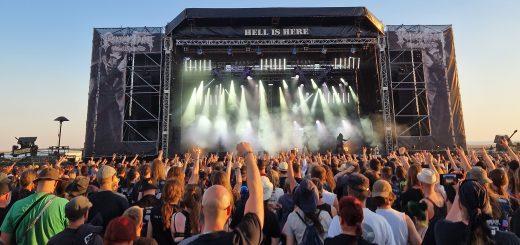
Die Menschen standen teilweise über eine Stunde lang Schlange, um hineinzukommen. Sie tanzten, stampften mit den Füßen und klatschten zu den Songs mit. Das war ein unglaubliches Gefühl! Es lief genauso gut, wie ich gehofft hatte, und ich habe danach sehr viele positive Rückmeldungen bekommen.
Klangwelt und Bilder und ein begeistertes Publikum
Wie war es für dich, ganz allein auf der Bühne zu stehen?
Bei „Tronsgårdhallingen“ spielst du zusätzliche Instrumente. Wie hast du das bei der Show umgesetzt? Hast du mit Backing-Tracks gearbeitet? In den kurzen Videoclips ist das nicht zu hören. Und was war in diesem Moment die größte Herausforderung für dich?
Allein auf der Bühne zu stehen, ist etwas völlig anderes, als mit einer Band aufzutreten, weil man niemanden hat, an dem man sich orientieren oder auf den man sich verlassen kann.
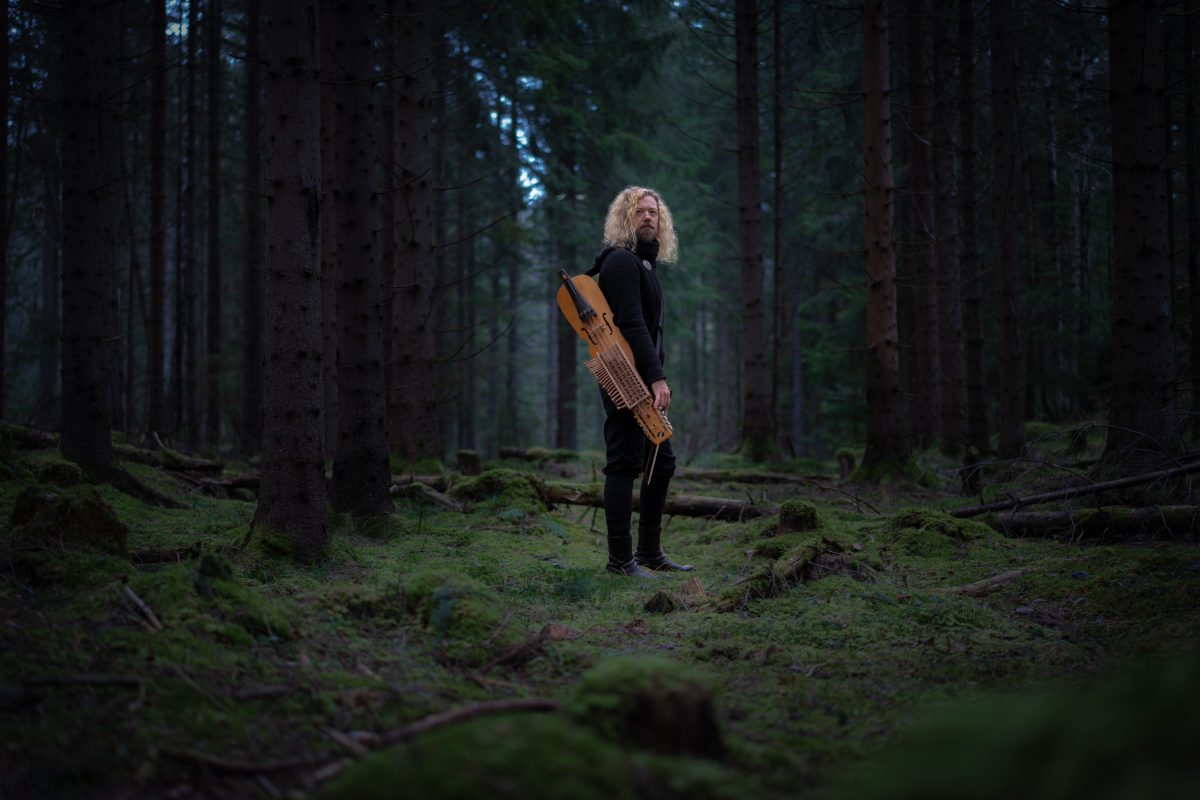
Bei dieser Show habe ich mit Backing-Tracks gearbeitet. Das einzige Instrument, das live gespielt wurde, war meine Nyckelharpa. Die Backing-Tracks hatte ich mit Drehleier, Moraharpa, Tagelharpa, Harmonium, Synthesizer, Rahmentrommeln sowie Percussion aus Stöcken, Steinen, Knochen und Hörnern erstellt.
Außerdem habe ich ein Video produziert, das mit den Backing-Tracks synchronisiert war und auf einer Leinwand hinter mir lief. Da ich allein auf der Bühne stand, war es mir wichtig, auch visuell etwas zu bieten und die Show für das Publikum abwechslungsreicher zu gestalten.
Das Video besteht hauptsächlich aus Drohnenaufnahmen von Landschaften und Natur, die ein Freund für mich gemacht hat. Und es hat tatsächlich sehr gut funktioniert! Ich habe gesehen, dass viele Menschen immer wieder auf die Leinwand geschaut haben – das hat mich sehr gefreut.
Du trittst normalerweise mit Bands auf und hast deshalb einen direkten Vergleich. Was ist für dich der größte Unterschied? Gab es etwas, das dich überrascht hat?
Der größte Unterschied ist, dass man niemanden hat, an dem man sich festhalten kann. Wenn irgendetwas passiert, ist niemand neben einem. Man ist vollkommen auf sich allein gestellt und trägt die Verantwortung für alles.
Wie hast du die Reaktion des Publikums erlebt? Was hat dich besonders gefreut oder beeindruckt?
Ich habe mich unglaublich gefreut, als ich gesehen habe, wie sich die Menschen zur Musik bewegen. Und als sie angefangen haben zu klatschen, hatte ich das Gefühl, dass ich sie wirklich erreicht habe.
Wie du bereits erwähnt hast, lief im Hintergrund ein Video. Oder gibt es für jeden Song ein eigenes Video? Welche Funktion hat es? Was wird darin gezeigt oder erzählt, und welchen Aspekt der Musik beziehungsweise der Songs möchtest du damit hervorheben?
Ja, für jeden Song gibt es ein eigenes Video, das mit meinem Backing-Track synchronisiert ist. Es handelt sich hauptsächlich um Drohnenaufnahmen aus der Natur, aber es gibt auch Ausschnitte aus kommenden Musikvideos.
Manche Videos zeigen ausschließlich Natur, andere erzählen eine Geschichte. Mehr dazu werde ich später verraten, wenn weitere Singles veröffentlicht werden.
Ein paar Geheimnisse
Gibt es etwas, das du bei zukünftigen Shows grundsätzlich anders machen möchtest?
Ich habe diesbezüglich ein paar Geheimnisse, die ich später enthüllen werde.
Geheimnisse – jetzt bin ich natürlich neugierig. Du hast sehr lange an diesem Projekt gearbeitet. Wie hat es sich im Laufe der Jahre entwickelt? Und wie nah ist das, was du jetzt präsentierst, an deiner ursprünglichen Idee?
Ich arbeite schon sehr lange daran, und tatsächlich entspricht es zu 100 Prozent der ursprünglichen Idee. Das Projekt war bereits vor vielen Jahren fertig. Es lag einfach in einer Schublade und wartete auf den richtigen Zeitpunkt für die Veröffentlichung.
Was war letztlich der entscheidende Faktor dafür, dass du das Projekt gerade jetzt einem Publikum präsentieren wolltest? Hat dabei auch dein Erfolg mit WARDRUNA und GÅTE eine Rolle gespielt? Jetzt war einfach der perfekte Zeitpunkt. Viele Menschen kennen mich inzwischen durch diese Bands. Dadurch ist es heute viel leichter, Aufmerksamkeit für meine eigene Musik zu bekommen als noch vor 15 Jahren.
Leider kenne ich bisher nur einen der Songs. Wovon handeln die anderen Stücke, die du bereits gespielt hast und die auf dem Album erscheinen werden?
Alle Songs sind instrumental. Zunächst werde ich einige traditionelle Stücke veröffentlichen, um meine Wurzeln und meine Herkunft zu zeigen. Danach werde ich beginnen, meine eigene Musik herauszubringen.
Ich komponiere bereits seit meinem 14. Lebensjahr auf unterschiedliche Weise Musik für verschiedene Instrumente. Deshalb habe ich eine ganze Menge Material, aus dem ich auswählen kann.
Diese traditionellen Stücke wurden über lange Zeit hinweg weitergegeben, schlicht indem sie immer wieder gespielt wurden – und jeder Musiker hat sie dabei ein wenig verändert. Was hast du an ihnen verändert? Was ist dein eigener Beitrag, deine persönliche Interpretation? Vielleicht kannst du auch ein wenig beschreiben, was den Charakter der Stücke ausmacht, welche Instrumente du eingesetzt hast und wie du ihren besonderen Klang erzeugst.
Die meisten dieser Stücke bestehen aus zwei oder drei Themen. Ich habe einige eigene Themen hinzugefügt und rund um die Melodien ein dunkles Arrangement entwickelt.Das Arrangement basiert hauptsächlich auf alten nordischen Instrumenten, ergänzt durch einen tiefen, dunklen Synthesizer. Über die Stücke hinweg gibt es vor allem einen dunklen Drone aus Drehleier, Harmonium und Synthesizer. Der Puls kommt von einer Rahmentrommel, während der Backbeat aus einer Mischung von Moraharpa, Tagelharpa und Nyckelharpa besteht. Als Percussion kommen ein Holz-Shaker, Stöcke, Steine, Knochen und Hörner zum Einsatz.
All diese Instrumente und Klänge schaffen eine dunkle Atmosphäre rund um die Nyckelharpa.
Eine dunkle Atmosphäre – so möchte ich diese Musik hören
„Tronsgårdhallingen“ wurde und wird traditionell auf der Geige gespielt. In der Bearbeitung für Nyckelharpa verändert sich jedoch der Klang und damit auch der Gesamteindruck. Die Musik wirkt dunkler und düsterer. Eine solche dunkle Atmosphäre zu erzeugen, gehört ja auch zu deinen erklärten Zielen.Warum findest du, dass diese Klangästhetik besonders gut zu dem Stück passt? Was macht die dunklere Atmosphäre für dich so stimmig?
Ich höre selbst schon immer gern dunkle Musik, deshalb fühlte es sich für mich ganz natürlich an, solche Musik zu machen. Außerdem habe ich diese Stücke noch nie auf diese Weise gehört. Genau so möchte ich diese Musik selbst hören. Deshalb wollte ich die Version dieser Stücke erschaffen, die mir persönlich am besten gefällt.
Wie gelingt es dir, die Tradition zu bewahren und gleichzeitig authentisch zu bleiben – also in dem Sinne, dass daraus deine Musik wird?
Oder anders gefragt: Sind Lieder, die über viele Generationen weitergegeben wurden, gerade deshalb zeitlos, weil ihre grundlegende Struktur erhalten bleibt, während jede Generation sie auf ihre eigene Weise interpretiert und damit den jeweiligen Zeitgeist widerspiegelt?
Ich denke, jeder, der diese Lieder spielt und mit ihnen arbeitet, ist ein Bewahrer der Tradition. Jeder trägt dazu bei, diese Lieder und die Tradition lebendig zu halten.
Ich hoffe, diese Musik über die Grenzen Norwegens hinaus bekannt zu machen und den Menschen in Europa die Möglichkeit zu geben, diese Lieder und diese Tradition zu entdecken.
Ausblick auf die Tour 2027
Du wirst mit dem Projekt auch auf Tour gehen. In welchen Ländern und Städten wirst du auftreten?
Ich plane, 2027 auf Tour zu gehen. Welche Länder und Städte es genau sein werden, werde ich später bekannt geben.
————————————————————————————————————————————————————————————————————————
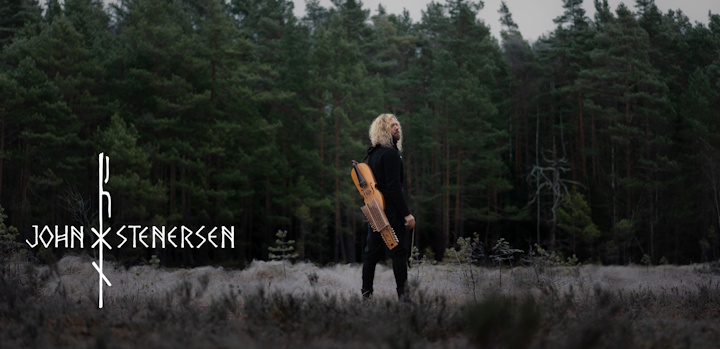
With the nyckelharpa at the heart of his music, JOHN STENERSEN combines ancient Nordic traditions with a distinctly dark and atmospheric sound. Known for his work with WARDRUNA and GÅTE, he has been developing his own solo project for many years, bringing traditional melodies together with drone textures, historical instruments and modern soundscapes. At the Midgardsblót-Festival, he presented the project live for the first time — alone on stage, but surrounded by a world of sounds and images.
What does Norwegian tradition sound like when viewed through a dark, modern sonic aesthetic? In this interview, he talks about his fascination with the nyckelharpa, the origins of his solo project, the unique atmosphere of Midgardsblót, and why now feels like the right moment to share his musical vision with a wider audience.
The Interview
Do you come from a (musical) family in which traditional music plays a role, or how did you first come into contact with traditional music?
No, I don’t come from a musical family. No one but me in my family plays an instrument, I’m the only one.
So was there a particular moment when you thought: I would like to play this music, too?
The interest for music started from a young age when I saw concerts and performances on TV of fiddlers and rock bands. I’ve always been drawn to the stage and music, I’ve always found that very intriguing. I think my first contact with folk music was through Annbjørg Lien and her album “Prisme”.
The nyckelharpa seems to be your instrument, as you have put it at the forefront of your solo project.
How did you come to play the instrument? Did you have lessons or a teacher? I read somewhere that you taught yourself to play the instrument.
I always wanted to play the fiddle, but I never found a teacher and it was too hard teaching myself that instrument from books, not knowing where to put your finger on a blank fretboard. It’s easier now with YouTube and stickers for your fretboard telling you where to put your finger, but back then I had nothing like that. I was at a festival in 2008 and there I met this Swedish man who talked about the nyckelharpa and I did not quite understand what it was, so he showed me a photo of it and the moment I saw that photo I knew that I can teach myself that instrument. So I searched it up on YouTube and I found one video of a woman playing the nyckelharpa and I loved the sound, because it sounds like a deep and dark Hardanger Fiddle.
So you fell in love with the sound. What happened next?
Two weeks later I drove to Uppsala to buy one. I got 15 minutes of instruction where he showed me how to hold the instrument and the bow, told me how it was tuned and showed me a scale. Then I got a pat on the shoulder and a “Good luck!”. I drove back to Norway and started practicing. It took a few years before I felt like I could say that I could play the nyckelharpa, but I got there in the end with a lot of practice.
You have apparently been working on your solo project for 15 years. How did the idea of developing a solo album come about? Does it have something to do with the instrument, given that it is traditionally played more as a solo instrument or accompanied by singing?
When I started my first band BERGTATT back in 2007 we always did instrumental songs, and I have always been composing so even on our first summer tour in 2009 we included some instrumental songs with the nyckelharpa as the main instrument. So that was when the thought of doing something solo started. So for every song I learned or every song I composed I always had the solo project in the back of my mind and I’ve been working on it on and off since then actually so it’s actually 17 years now that I think about it.
‘Tronsgårdhallingen’ – Roots in traditional music
You’ve now completed the project and the first song you released was “Tronsgårdhallingen”. Why did you choose this particular song to introduce your project? Do you have a special connection to it?
It’s a song I’ve heard for many years and it always makes people move. Either stomping their feet, dancing or in some way moving to the song, but I’ve never heard it in a dark arrangement, so I wanted to make that. That’s what I do with all my songs. I chose to start with this because it’s a well known traditional tune from Norway and I wanted to start my project with first showing my roots and honor the tradition by making my own version of this before releasing my own compositions.
The Midgardsblót-Festival is quite a special festival (at least from my perspective). Is it special for you as well? You have played there with WARDRUNA and KALANDRA, too, haven’t you?
Midgardsblót is my favourite Norwegian festival, it has such a good vibe. I have played there many times. I played there the first year with BERGTATT and again another year, and I’ve also played there with WARDRUNA and KALANDRA. This is also where I met Einar [Selvik, founder of Wardruna] for the first time, and I’ve also seen WARDRUNA play there before I joined the band.
A world of sound and images, and an enthusiastic audience
What does it mean to you to present your solo project there in particular?
I chose to release my solo project at Midgardsblót because it was the perfect spot for me to do it. I knew there were going to be a lot of people who were interested in this kind of music there, and I’m so happy about the response. There were people standing in line for over an hour waiting to get in. People were dancing, stomping their feet and clapping along to the songs so that was an amazing feeling! It went as well as I had hoped for! I got so many positive comments afterwards!
What was it like to stand on stage alone? You play additional instruments on “Tronsgårdhallingen”. How did you handle that during the show? Did you use backing tracks? What was the biggest challenge for you in that moment?
Standing alone on stage is something completely different than being on stage with a band, because you have no one to lean on. When I played this show I used backing tracks, so the only thing that was live was my nyckelharpa. I had created backing tracks with hurdy-gurdy, moraharpa, tagelharpa, harmonium, synth, frame drums and percussion from sticks, stones, bones and horns. I also created a video that’s synched to the backing tracks playing on a screen behind me. Because I’m only one person on stage it was important for me to have video to make it more interesting for the audience. It’s mainly drone shots of nature that a friend of mine made for me, and it really worked! I saw a lot of people watching the video so that was great!
You normally play in bands, so you have a direct comparison. From your experience, what is the biggest difference? Was there anything you hadn’t expected?
The biggest difference is that you have no one to lean on. No one is there with you if anything happens. You’re completely alone and you’re responsible for everything.
How did you perceive the audience’s reaction? What pleased or impressed you the most?
I was so happy when I saw people move to the music, and when people started clapping I felt I had reached them.
As you said, there was a video in the background. What role does it play? What is being shown, and which aspect of the music is it intended to emphasise?
Yes, there’s a video for every song synched to my backing track. It’s mainly drone shots of nature, but there are also some snippets of upcoming music videos. Some of them are only nature, and some of them tell a story. I will reveal more of that later as more singles are being released.
A few secrets
Is there anything you would fundamentally do differently in future shows?
I have a few secrets around this I’ll reveal later.
Secrets – I’m curious to see what they are. You have worked on the project for quite a long time. How has it developed over the years? How close is what you have presented now to the original idea? Yes, I’ve been working on it for a very long time and it’s 100% as the original idea. This project has been ready for many years, just laying in a drawer waiting for the right time to be released.
What was the decisive factor in making you take the project to an audience now, at this particular point in time? Did your success with WARDRUNA and GÅTE play a role in this?
Now was the perfect time as a lot of people now know me from these bands, so it’s much easier to get some attention around my music now compared to 15 years ago.
Unfortunately, I only know one of the songs so far. What are the other songs you performed and that will be on the album about?
All songs are instrumental. I’ll first release some traditional songs to show my roots and where I come from, and then I’ll start releasing my own music. As I’ve been composing music in some way on different instruments since I was 14 years old, I have a lot of music to choose from.
These traditional songs were passed down over a long period of time simply by being played, and each musician changed them a little. What have you changed? What is your contribution, your interpretation? Perhaps you could describe a little here what defines the songs, which instruments you have used, and how you create their distinctive sound.
Most of these songs have 2-3 themes. I have made a few themes myself to add to the songs and I have made a dark arrangement around the melodies. This arrangement consists mainly of old nordic instruments, but I’ve also added a deep dark synth. It’s mainly a dark drone throughout the songs consisting of Hurdy-gurdy, harmonium and synth. The pulse is a frame drum and the backbeat is a mix of moraharpa, tagelharpa and nyckelharpa. The percussion is a wooden shaker, sticks, stones, bones and horns. All of these instruments and sounds create a dark atmosphere around the nyckelharpa.
A sombre atmosphere – that’s how I’d like to listen to this music
“Tronsgårdhallingen” was and is traditionally played on the fiddle in folk music. When adapted for the nyckelharpa, the sound and the overall impression change. The music sounds darker and more sombre. One of your aims is also to convey a dark atmosphere. Why do you feel this suits the song better? Why does a darker atmosphere feel more appropriate to you?
I listen to dark music, I always have, so it felt very natural to me to create dark music. I also have never heard these songs this way before. This is the way I want to hear these songs myself, so I wanted to create the version of these songs that I like best.
How do you manage to preserve the tradition while also remaining authentic? Authentic in the sense that it is your music. Or, put another way: are songs that have been passed down through many generations timeless precisely because their basic structure remains intact, while each generation “colours” them in a way that reflects its own spirit of the age?
I think everyone who plays and uses these songs are tradition keepers. They all help keep these songs and the tradition alive. I hope to bring this music out of Norway and let the people of Europe discover these songs and this tradition.
A look ahead to the 2027 tour
You will be going on tour. Which countries/cities will you be performing in?
I plan to go on tour in 2027 and I’ll reveal the countries and cities later.
NEWSLETTER. FREITAGS. KOSTENLOS.
Bildquellen
- John Stenersen Insta.Story.JS-1: John Stenersen
- John Stenersen .Photo-Dan.Sundar: John Stenersen (Photo Dan Sundar)
- john stenersen 2026 tronsgårdhallingen: John Stenersen / Foto: Dan Sundar
- john stenersen interview bild: John Stenersen / Photo- Michał _Angelus_ Majewski (Maj Music)





Neueste Kommentare